

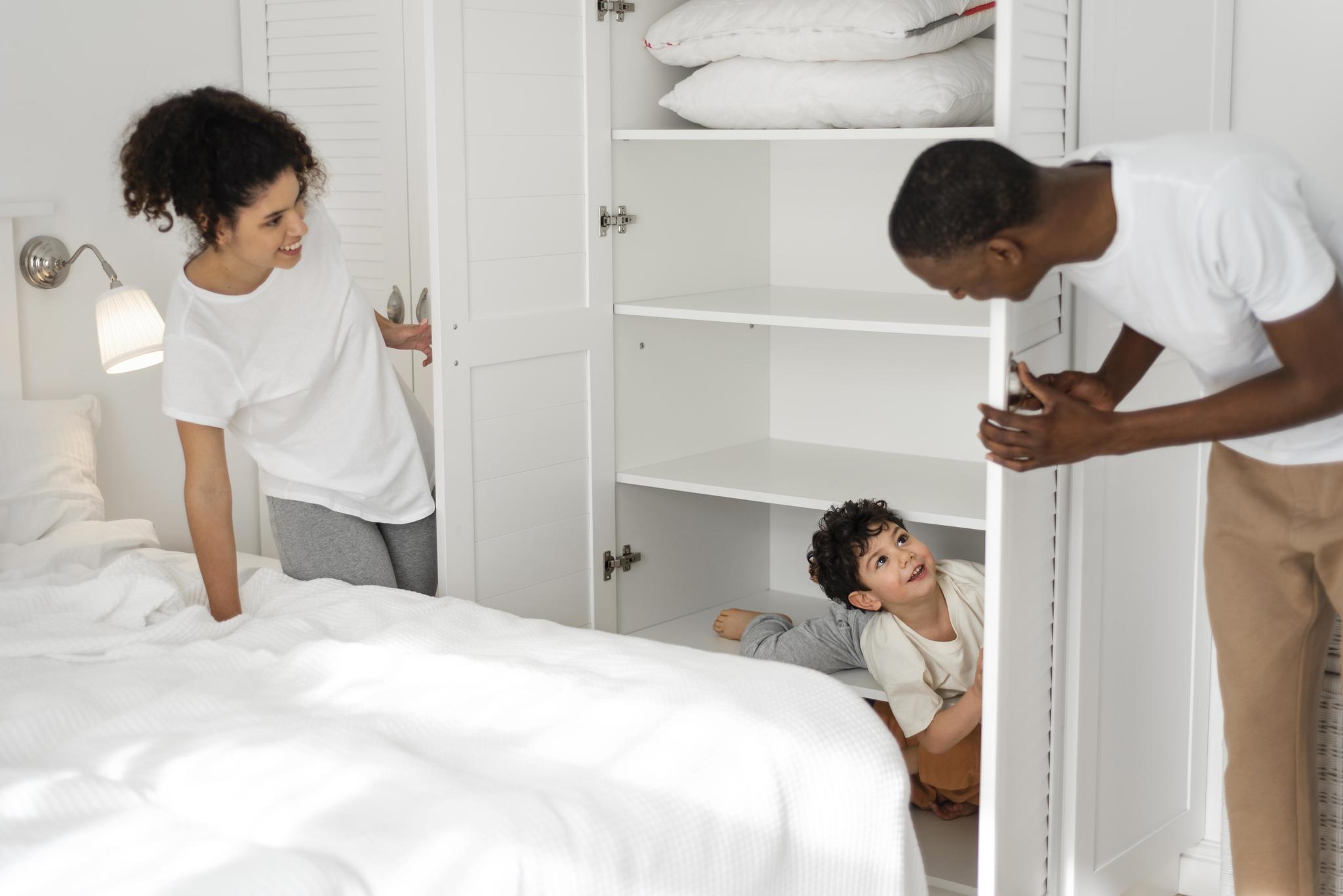
As your baby grows, you’ll want to keep them safe and secure in your home. You can do this by baby-proofing every room. To help you out with this task, we've compiled some of the best ways to keep cabinets baby-friendly:
Sliding Docks
Sliding Docks are a great way to keep your baby safe from cabinets. They are used by placing them behind the cabinet doors, and then putting a piece of Velcro on both sides of the door. The Velcro is also placed on top of it so that when you shut the door, it will stick together and not open.
It's easy to install Sliding Docks into any cabinet that has hinges or slides. You can use them for kitchen pantries, bathroom medicine cabinets, under sink cupboards etc., This makes them an easy solution for keeping your little one from getting into anything he/she shouldn't be reaching for inside any type of cabinet in your home!
Velcro
Velcro is a great way to babyproof your cabinets. It's easy to install, easy to remove, and nearly impossible for a toddler to get off. You can buy large strips of the stuff at any hardware store, or cut your own from an old t-shirt or pair of pants (or both). To install it:
- Get some Velcro strips in whatever size you want—the best thing about this method is that it's up to you depending on how much space you have free on your cabinets!
- Cut the Velcro into smaller pieces if necessary so everything fits nicely together with no gaps along the sides or top/bottom where they overlap each other too much; this will create an airtight seal around all four sides of each cabinet handle so little hands can't pull them open easily anymore either!
Pull Cord-Locks
You can use a pull cord-locking device to keep cords out of reach. This is an easy way to keep your baby safe from dangerous cords that could cause harm if they were to wrap around their neck or be tugged on.
- Pull cord locks are small devices with a latch that attaches on the end of a dangling cord, preventing it from being pulled off the hook or rack where it’s supposed to stay securely. You may find them in hardware stores, big box stores, and online retailers like Amazon—or you can make one yourself! Check out our blog post for instructions on how we made ours using some basic hand tools (and some free time).
Foam Bumpers
Foam bumpers are soft and flexible, which makes them ideal for protecting the corners of furniture. They can also be used to protect the edges of tables from bumps and scrapes. Foam bumpers are particularly useful in high traffic areas such as nurseries and playrooms, where there's a lot going on at once.
Do you need to baby proof your cabinets? Here's how!
Here's how to install foam bumpers:
- Measure your cabinet door or drawer opening. Add half an inch (1 cm) for each side of the opening so that when you cut out your foam piece it will fit snugly into place without too much room around its edges.
- Cut out your piece using scissors or a utility knife—a ruler is helpful here if you're working with hardwood cabinets like oak or maple because they're more likely than soft woods like pine or poplar not only because they tend not only because they tend not only because they tend not only because they tend not only because
Cover Knobs
Cover knobs. Put a foam cover over the knob, or use a piece of foam to cover the knob, or use a foam ball to cover the knob.
Really, it doesn't matter what you use as long as it's soft enough for your baby to grab onto and pull off. If you can't find anything else at home, try wrapping some leftover yarn around the knob and tying it off with a bow for an extra pop of color!
You Can Use These Products And Techniques To Keep Your Babies Safe
Use these products and techniques to keep your babies safe:
- Use outlet plugs. These are easy to use, inexpensive, and do not require any installation tools. You just need to push them into the outlets on the wall behind your cabinets. This is a great way to prevent an infant from sticking their fingers in an electrical outlet while they crawl around inside your cabinets.
- Install safety latches on cabinet doors. This will help prevent children from opening up cabinet doors and getting into potentially dangerous areas like pots full of boiling water or baking soda (which can be harmful if consumed). These latches are inexpensive and easy to install—you simply slide them over each door hinge so that it will stay closed when closed properly but can easily be opened by adults with one hand by simply lifting up on the plastic handle (which is where the name “safety” comes from).
Conclusion
After reading this article, you should know how to baby proof your cabinets. As a final reminder, it’s important that you take the time to evaluate your current situation and consider what measures are necessary for your home. If there are any questions we didn’t cover in this article, please leave us a comment down below!
Share:
Full Child Proofing Checklist 2022
Items For Your First Born